
Read Livingston County Property Tax Records in Layers
No single screen holds everything. The assessment roll fixes the parcel, its owner of record, and any exemptions. The local collector's bill carries the levy and payment detail. Delinquent county taxes sit with the County Treasurer. Unpaid school and village taxes also move there, but only after they pass local collection.
| Tax source | What it answers | Route |
|---|---|---|
| PROS | Owner, class, land and total assessment | Address, owner, or SBL |
| Assessment rolls | Filed roll for a municipality and year | County links, 2014 through 2025 |
| BAS collection portal | Bill and payment search after selecting collection | Bill number, SBL, address, or owner |
| County Treasurer | Delinquent county and transferred unpaid taxes | Office inquiry |
Anchor every search with the SBL and municipality. That way each layer of Livingston County property records describes the same parcel.
PROS and Livingston Assessment-Roll Archives
Real Property Tax Services gathers the county's tools in one place: PROS, GIS maps, assessor and collector contacts, grievance material, and posted rolls. The rolls go back to 2014 and run through 2025. An older roll helps you trace changes over the years. You can follow owner labels, exemptions, class, and assessed value. It is not a payment ledger, though. Treat it as a snapshot of assessment rather than proof a tax bill was paid. The county assessment-roll landing page displays the archive and its roll links.
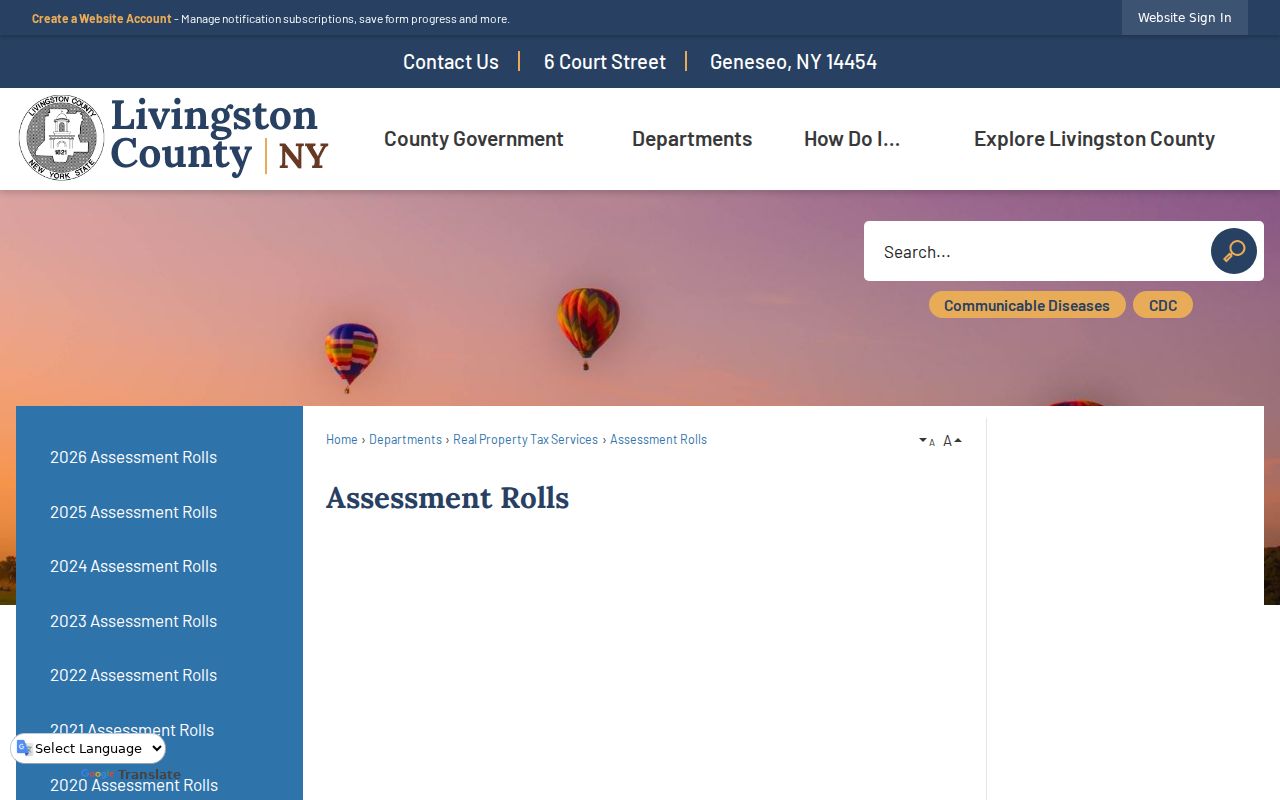
Pick the town and roll year with care. Match the Tax Map number rather than trusting a repeated owner name to land on the right parcel.
Land Assessment and Total Assessment in Livingston
Two numbers on the roll get confused often. Land assessment covers the land alone. Total assessment folds in the taxable improvements as well. The Hosted Parcel View shows both figures alongside acreage, use class, owner, and SBL. These are administrative values for computing the tax, not a forecast of what the parcel would sell for.
- Assessed value
- The value placed on the parcel for assessment administration.
- Taxable value
- The amount subject to a levy after applicable exemptions and rules.
- Market value
- An estimate of the property's value in the market.
- Exemption
- A statutory reduction or treatment recorded on the roll when eligibility is approved.
Owner, Mailing Address, and Situs on the Roll
The roll's owner field helps identify a parcel. PROS itself warns that updates can lag and nothing is guaranteed current. Two addresses matter here. The mailing address is where notices go. The situs address marks the property's physical spot. The two can differ without any error in the record. After a recent transfer, set the roll beside the newest deed on file with the County Clerk. Keep the full recorded label for an LLC, trust, or estate. A mailing address tells you nothing about who lives there. A ZIP code alone will not settle which town or village handles the assessment.
Find Livingston Tax Bills Through the Right Collection
The county points visitors to several tax channels, including BAS and TaxLookup. Each one asks you to choose a collection first. Search controls typically cover collection, bill number, Tax Map number, address, and owner. Current town, village, or school bills may still rest with a local collector. The Treasurer takes over transferred delinquencies. The county-linked BAS entry shows the collection-selection step before any bill search begins.
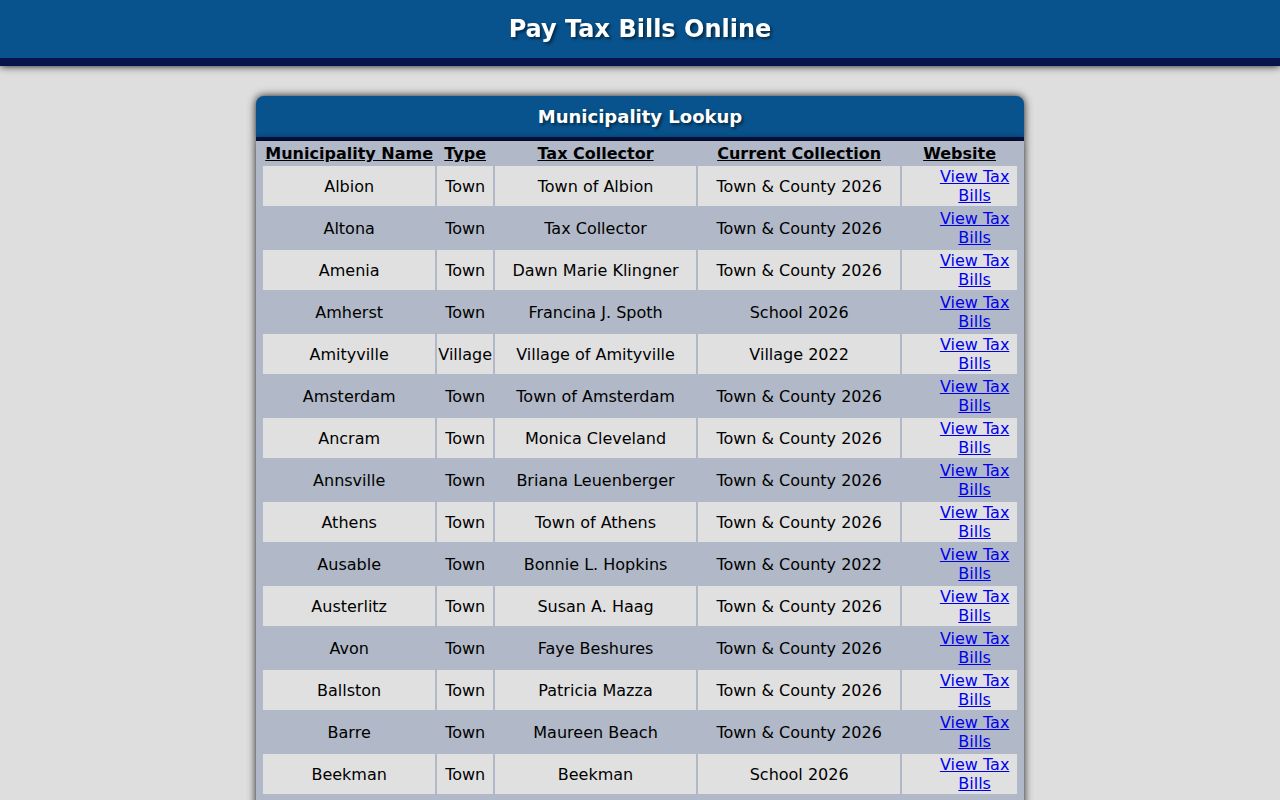
No bill in the results? Check the year, municipality, and collection status first. Only then consider whether tax is actually due.
Seventeen Livingston Towns and Local Assessors
Assessment in Livingston County runs locally across seventeen towns. Real Property Tax Services supports them countywide and hosts shared access. Villages add a second municipal layer for some tax and land-use questions. Write down the exact municipality PROS returns. Geneseo, Dansville, and Avon can each mean a village or the town around it. Your local assessor explains the parcel inventory, exemption entries, the tentative roll, and assessment review. RPTS supplies countywide links and data support. The Treasurer never sets assessed value, and the County Clerk never calculates the bill. Route each question to its custodian. That habit alone prevents conflicting answers.
Livingston Assessment Level and Equalization
New York's level of assessment measures how local assessed values line up with market value overall. It looks at the whole roll. A level of 50 aims for about half of market; 100 means full market level. The equalization rate spreads the tax burden fairly among municipalities that assess at different levels. It says nothing about whether one parcel's assessment is fair. Use the current municipal level. Add official state guidance when translating an assessment into market terms. Never apply a countywide ratio without checking the town and roll year first. A recorded deed sale is worth studying. But its price can reflect special conditions that make it a poor comparable.
Grievance Day and RP-524 in Livingston
A taxpayer who contests an assessment starts locally with form RP-524. The county posted a town-by-town 2025 Grievance Day schedule. That shows why a single statewide date will not do. Read the tentative roll and talk with the assessor. Collect comparable evidence, and confirm your municipality's filing deadline and Board of Assessment Review hours. The New York grievance procedure lays out the official steps.
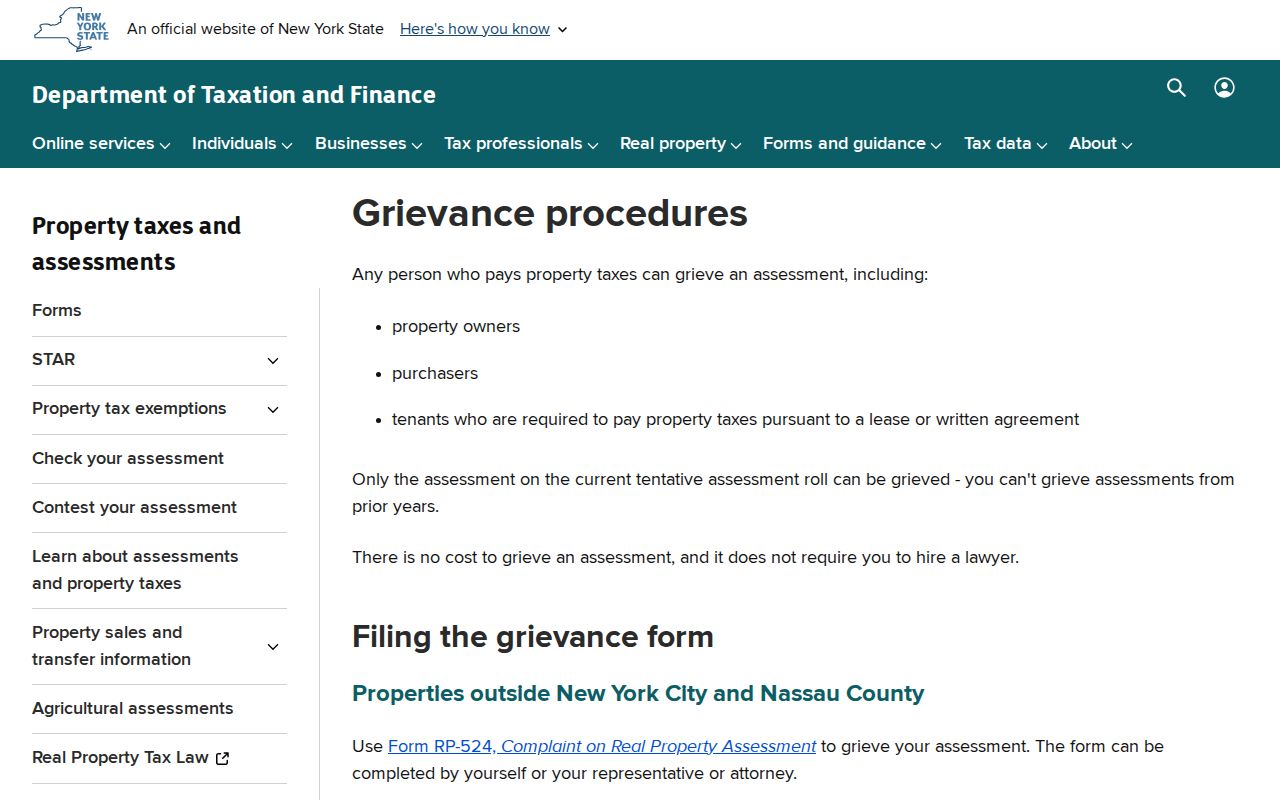
Filing with the state costs nothing. A complete, timely local filing still decides everything.
SCAR, STAR, and Exemption Context
If the Board of Assessment Review rules against you, Small Claims Assessment Review may be next for eligible owners. It runs through the New York courts. Check the official SCAR material for eligibility, the petition form, filing route, and deadlines. SCAR reviews the assessment itself. It does not challenge a tax rate. Nor does it settle a title dispute. STAR can show up as either an exemption or a credit. It depends on the owner's program status. Every other exemption carries its own rules for eligibility, ownership, residency, use, and filing. A roll entry reflects treatment for that roll alone, never future eligibility. Bring exemption questions to the assessor and current state program guidance.
Why a Livingston Sale Can Precede the Tax Update
A deed often reaches the Livingston County recorder before the assessment database catches up. The parcel number may still show the prior owner of record for weeks after closing. New construction and lot splits follow the same pattern. They appear first in municipal planning records and a recorded plat map, then later in GIS and the tax roll. The 2026 Lima Road subdivision notice shows all four of these time states in one place.
Timing check. Match the roll year and SBL, then confirm recent ownership or parcel changes in the Clerk's records before relying on Livingston County property tax records.
For the exact tax bill, contact the right collector and match the year. Delinquency questions belong with the Treasurer. And for what a value means, rely on assessment-level guidance instead of treating a bill total as market value.
Follow the Livingston Property-Tax Calendar
New York's cycle runs from inventory and valuation work through a tentative roll. Local review follows, then a final roll, tax levies, and collection. Dates and hours stay local. That is why Livingston County posts a town-by-town grievance schedule instead of one countywide appointment. Check the current roll calendar and the assessor's notice for your parcel's municipality before acting. Evidence for review can include recent comparable sales. An appraisal works too. So do photographs, inventory corrections, and records of a condition affecting value. Focus on assessment evidence. The tax rate is a separate matter. RP-524 starts the administrative review. Eligible owners can reach SCAR only after the Board of Assessment Review route. Filing the state grievance form costs nothing. Timeliness and a complete form matter a great deal. For payment proof, use the collector's receipt or the official bill history. For a delinquency letter, contact the Treasurer. A roll correction belongs with the assessor or RPTS. Keeping those roles separate keeps a payment question from turning into a value dispute.