
Search Livingston County Property Records From One Reliable Key
A Livingston County property search succeeds or stalls on the key you bring to it. An address moves fastest in PROS. An owner name can surface several parcels at once. The strongest key is the Tax Map number, also called the SBL. Every county system speaks that language. Before jumping to another portal, write down the owner of record, the situs and mailing addresses, the municipality, the assessment, the deed book and page, and the SBL. That short list connects the Clerk's deed records to the assessor. It also links the tax roll and the GIS map without guesswork.
- Search PROS by street address, owner name, or Tax Map number.
- Confirm the parcel shape and municipal boundary in county GIS.
- Use the deed reference or party name in the County Clerk's Public Records Cloud Search.
- Check the applicable assessment roll and tax collection channel.
- Ask the custodian for an older, certified, or non-indexed record when the online result is incomplete.
Each tool answers a different question. The assessment record is an administrative snapshot, the deed is the recorded transfer, and the GIS line is a reference map rather than a survey. A full title examination may call for more instruments and professional review.
Livingston County Property Records Follow a Four-Office Trail
The County Clerk, at the County Government Center, 6 Court Street, Room 201 in Geneseo, records deeds, mortgages, liens, maps, judgments, satisfactions, financing statements, and real-estate transfers. The office takes calls at 585-243-7010 or 585-335-1712. Real Property Tax Services supports the seventeen towns. It publishes assessment-roll links and provides PROS and GIS access. Delinquent county-tax questions go to the Treasurer. That office also receives unpaid school and village taxes after local collection. Permits, planning, zoning, and local code files stay with the individual town and village offices.
Livingston County Clerk
6 Court Street, Room 201
Geneseo, NY 14454
585-243-7010
No single office produces every answer. Take instruments to the Clerk, the assessment record to PROS, location to GIS, and bills to the Treasurer or local collector. Land-use files belong to the correct village or town.
Start a Livingston County Property Search in PROS
The county-linked PROS Quick Search accepts a street address, a Tax Map number, or an owner name typed Last, First. Street Finder lists public roads. Municipality separates the county's towns and villages. Advanced Search adds a sale-date range, neighborhood, and street. These controls matter more than they first appear, because a mailing city such as Geneseo, Avon, or Dansville does not establish the assessed municipality. PROS is an assessment, inventory, and comparable-sales portal, not the County Clerk's deed index.
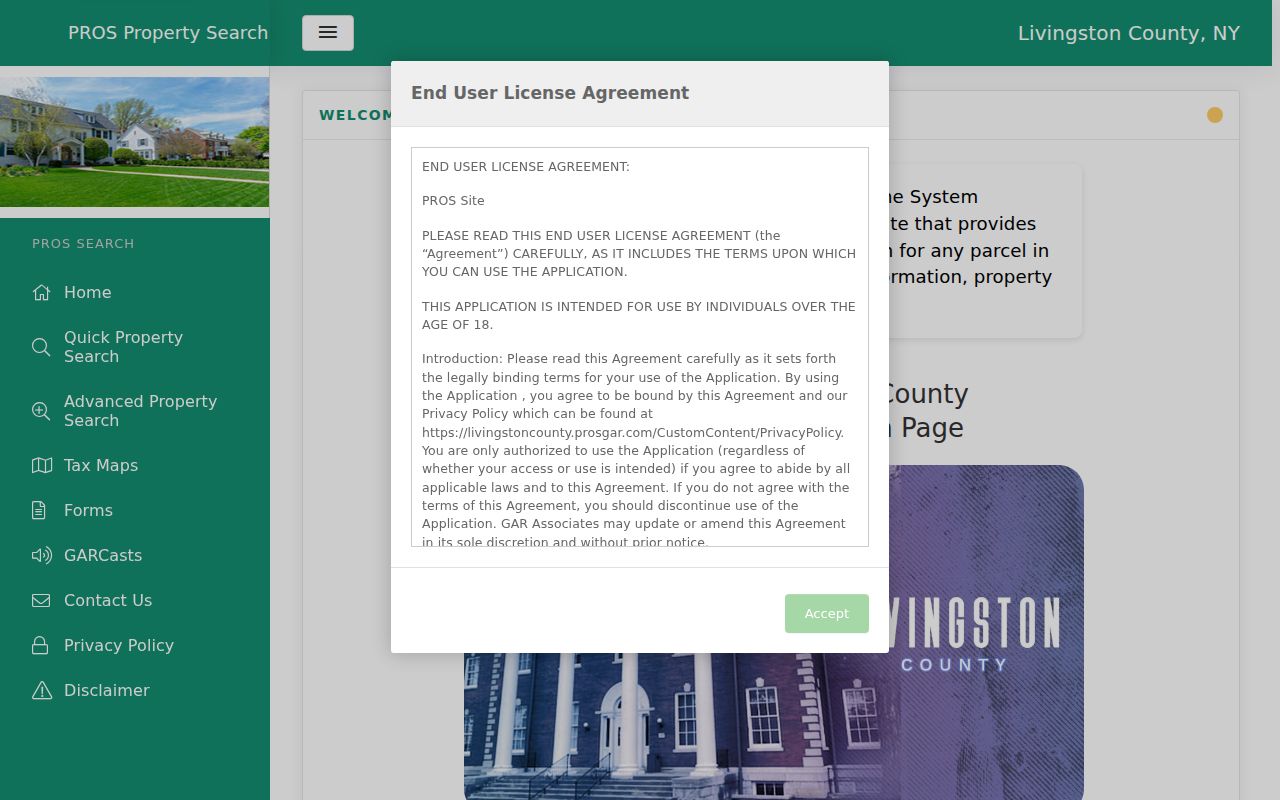
Copy the result rather than trusting one screen. Owner and mailing address can differ from the situs address, and the system warns that changes may not appear at once.
The Livingston County Deed and Mortgage Index
The County Clerk's online index covers deeds, mortgages, liens, maps, judgments, and related filings. It runs through the Public Records Cloud Search. The portal offers quick and advanced modes for terms and date windows. The index-only word search stays separate from OCR or full-text phrase searching. The portal supplies no assumed wildcard. Search current and former party names, business variants, and the book/page clue obtained from GIS or PROS. The portal's own search filters are the practical starting point.
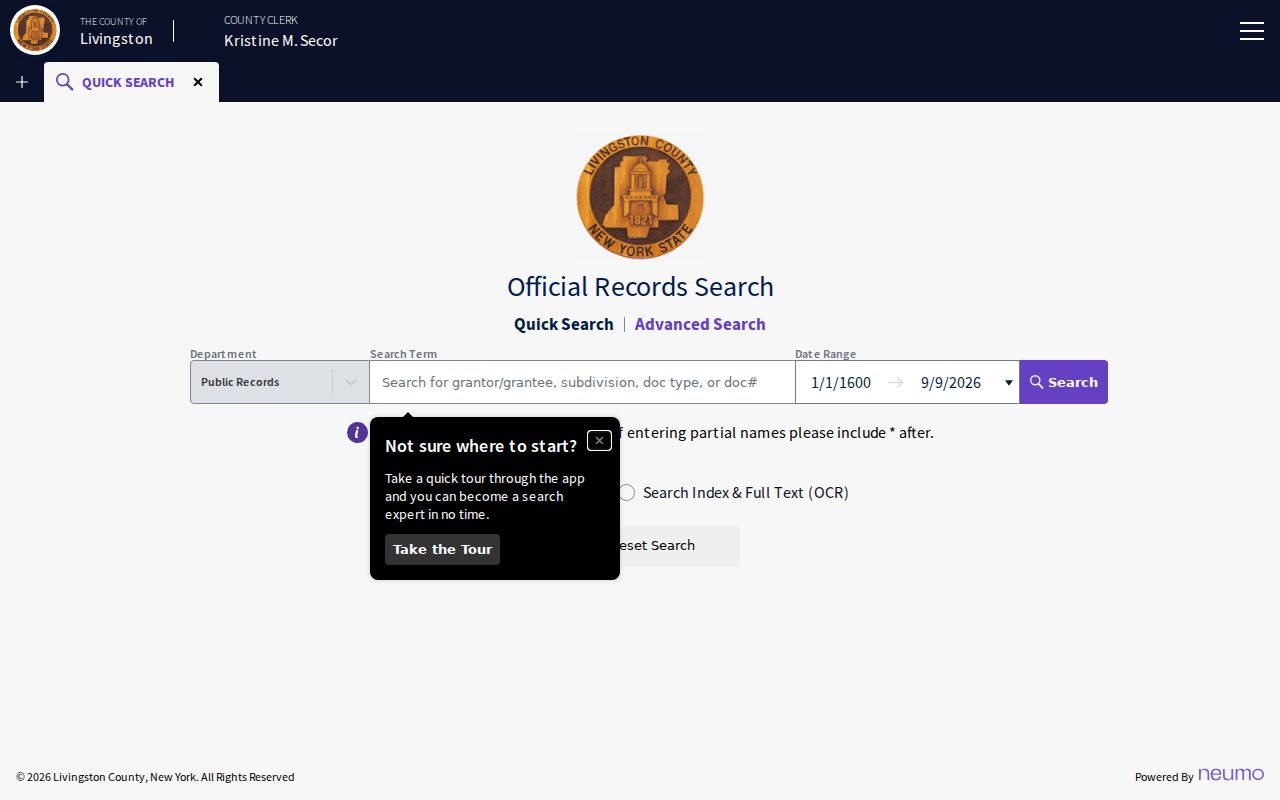
Land records in Livingston County date back to 1821. That is according to county guidance on custody of these documents. The guidance stops short of naming the earliest index or images available online. So a missing book online is not proof that no instrument exists. Contact the Clerk before drawing that conclusion about any Livingston County property records search.
What Livingston County Property Records Document
Every record set in Livingston County property records describes one slice of the same parcel. The SBL number and the legal description tie those slices together far better than a modern mailing label ever could.
| Record set | What it contributes | Primary custodian |
|---|---|---|
| Deeds and mortgages | Transfers, parties, legal descriptions, and secured interests | County Clerk |
| Assessment roll | Owner of record, class, acreage, land and total assessment | Town assessor and RPTS |
| Tax bill | Levy, collection, payment, and delinquency information | Local collector and Treasurer |
| Parcel map | SBL, shape, adjoining parcels, address, and reference layers | County GIS |
| Permit or zoning file | Work, inspections, variances, site plans, and land-use action | Town or village |
A recorded deed can confirm the transfer that an index lists. It cannot prove that every lien has been cleared. Likewise, the assessment roll shows an owner of record label and a value, but it stands in for neither the deed nor a current title search.
Livingston County GIS Connects Map, Assessment, and Deed Clues
The Hosted Parcel View puts parcel polygons on the map with fields for owner_name, owner mailing address, situs information, Tax Map ID, land use, acreage, land and total assessment, and deed book and page. Other county services layer on roads, address points, municipal boundaries, facilities, protected parcels, and base maps. One layer, named RPTS Tax Parcels 2021, predates the current hosted parcel view. Check the layer metadata before treating any label as current. The Livingston interactive GIS viewer supplies the visual parcel context shown here.
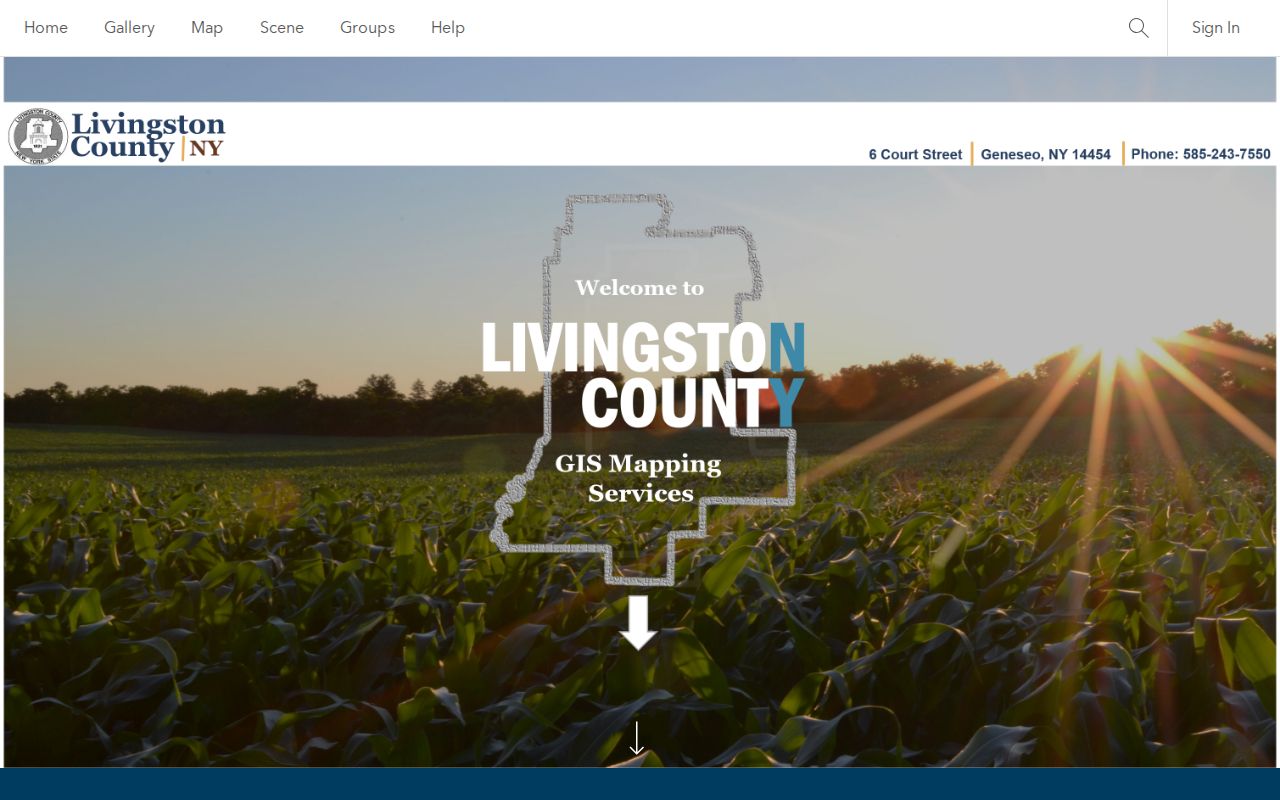
The GIS map lines help with cross-referencing a parcel, deed record, or assessment detail. They carry no surveyor's authority, so do not rely on them to settle an encroachment dispute or position an improvement.
Assessment, Tax Bill, and Delinquency Are Separate Questions
PROS and the posted assessment rolls carry the taxable record and its assessed figures. County roll links run from 2014 through 2025. To chase a bill, start with the collection channel the county links. That channel includes BAS once the right collection is picked. Many current questions actually sit with the town, village, or school collector. Delinquent county taxes belong to the Treasurer. Unpaid school or village taxes also land there once their collection windows close.
Land assessment is the value placed on the land alone. Total assessment folds in taxable improvements. Neither figure is a current sale estimate by itself. New York's level of assessment gives useful context. A level of 50 aims assessments at about half of market level. A level of 100 signals full-market assessment. The state equalization rate compares how municipalities assess for sharing tax burden. It says nothing about whether one parcel is fairly assessed.
Current Owner Labels Can Trail a Livingston County Deed
PROS warns outright that updates trail real-world changes and nothing is guaranteed current or complete. So a familiar mismatch appears after a sale. The County Clerk holds the new deed while the assessment roll or GIS still lists the prior owner. The dependable fix is to take the SBL and the deed book/page from the parcel record. Search the latest recorded grantee, and match the legal description against the subject parcel. The paper trail settles what the label has not caught up to.
Best evidence path. Treat the assessment owner as a search lead, then confirm a recent transfer in the Clerk's recorded instrument and obtain a certified copy when needed.
An LLC, trust, estate, or fiduciary name may stand in for a person. Try exact and variant spellings when searching, then turn to the New York business entity database or WebSurrogate only if that separate identity question matters to your deed records search.
Permits Stay With Livingston County Towns and Villages
Livingston County has no incorporated cities. It has seventeen towns and nine villages. Every permit search starts by naming the actual municipality. Geneseo posts code-enforcement and form pages. These cover permits, variances, site plans, subdivisions, complaints, and historic-district matters. Avon links building, pool, and sign forms through Public Works. Dansville splits its village and town code channels. No unified countywide, address-keyed permit database exists.
A strong request names the street address, SBL, owner or applicant. It also gives the type of work and the approximate year. Ask for permits, certificates, inspections, violations, variances, site plans, subdivision material, and responsive board minutes. If the municipal page offers only forms, contact the clerk or code officer. Use that agency's FOIL process for any existing non-exempt records.
Recorded Liens and Releases Need Their Own Livingston Search
The Clerk's index reaches well beyond deeds. Mortgages, satisfactions, mechanic's liens, judgments, tax liens, and lis pendens all appear there. Other real-estate filings show up too. One caution applies to liens in Livingston County property records. A mortgage entry alone will not tell you whether the debt is still open. You have to look for the later satisfaction or discharge before drawing any conclusion. A lis pendens is also easy to misread. It only signals pending litigation rather than a final judgment. UCC filings add one more wrinkle. County and state systems can differ depending on the debtor and the collateral. No single local query settles every financing statement.
Livingston County announced property alerts on June 12, 2026. A free account can watch a name, a business, a search term, or a specific document. It can also watch several properties at once. The alert simply gives early notice of a new indexed filing. It does not prevent fraud, insure title, or replace review of the instrument itself.
Older Livingston County Ownership Crosses the 1821 Line
Livingston County was organized in 1821 from parts of Ontario and Genesee Counties. Earlier research must follow the land's prior jurisdiction, not the modern county name. One exception deserves note: Ossian was annexed from Allegany County in 1857, so Allegany records matter for earlier Ossian deeds and probate.
FamilySearch holds Livingston land-record images to about 1906 per the County Historian, while the Clerk keeps original custody and copies. Historic maps from 1809, 1812, 1823, 1852, 1858, 1872, and 1902, along with Sanborn and USGS series, tie old roads, mills, farms, and adjoining owners to later parcels. The legal description, grantor and grantee names, and book and page control the chain.
An estate transfer may call for WebSurrogate, Livingston County Surrogate's Court records, and an executor's deed. Foreclosure and other Supreme Court matters sit in WebCivil Supreme or NYSCEF. Sealed and restricted records stay unavailable. Court indexes are leads only; the County Clerk or the court file supplies the complete papers where public access permits.
The County Historian announced a Preservica collection in April 2026 with more than 4,000 scans and a catalog nearing 50,000 items. The 2025 annual report also noted over 291,000 newspaper pages rescanned to archival standards. Newspapers surface estate notices, tax sales, planning hearings, and old business names. Return each clue to the deed, court, or assessment record to confirm it.
Probate, Court, and Historic Files Fill Livingston Gaps
An estate transfer may call for WebSurrogate. Livingston County Surrogate's Court records and an executor's deed may also be needed. Foreclosure and other Supreme Court matters sit in WebCivil Supreme or NYSCEF. Sealed and restricted records stay unavailable. Court indexes are leads only. The County Clerk or the court file supplies the complete papers where public access permits.
The County Historian announced a Preservica collection in April 2026. It includes more than 4,000 scans and a catalog nearing 50,000 items. The 2025 annual report also noted over 291,000 newspaper pages rescanned to archival standards. Newspapers surface estate notices, tax sales, planning hearings, and old business names. Return each clue to the deed, court, or assessment record to confirm it.
Use FOIL for Existing Livingston County Records
New York's Freedom of Information Law sits in Public Officers Law Article 6. It governs record requests to county and municipal agencies. Livingston County names the County Administrator as its Records Access Officer. An online request route is linked from the county's Find Records page.
Agencies generally respond within five business days. The reply either grants access or denies the request. It may instead acknowledge the request with an approximate date for a fuller answer. Appeals are generally due within thirty days. Paper copies up to 9 by 14 inches generally cost twenty-five cents per page.
Remember what FOIL can and cannot do. It reaches records that already exist. It cannot force an office to run a title search. It cannot make an office answer questions or build a new analysis. Describe the record plainly. Name the office that holds it. Give the address or SBL, the names, the date range, and the format you want. A certified deed copy is a special case. That request follows the Clerk's own copy process instead of a generic FOIL filing.
Limits of Livingston County Property Records
Livingston County property records answer many questions. They can show the assessed owner of record, recorded transfers, and liens of record. They also cover map context, assessments, tax collection, and municipal land-use activity. Still, the information has limits. Entries may lag behind events. They may sit under an unexpected name, or tie to an older address. ZIP codes describe mail delivery, not town or village lines. And a GIS polygon never replaces the deed's legal description.
Lawful use. Use Livingston County property records for parcel research, due diligence, boundary context, tax review, and house history, never to stalk, harass, or harm a person.
Some searches carry real stakes. A purchase, dispute, inheritance, or construction plan deserves more than a database result. Verify everything with the office that actually holds the records. Bring in qualified professionals as needed. A public-record search in Livingston County is useful evidence gathering. But it is not a guaranteed title search, legal opinion, appraisal, or boundary survey.